How Much Money Is Your Sales Copy Quietly Losing You?
The expensive mistake even experienced direct-response marketers make… and why rewriting your headline probably won’t fix it.
Let me ask you something.
When was the last time you spent a small fortune on a sales letter, launched it with high expectations, and then watched the results fall flat?
Last month? Last year? Or perhaps you’re going through that miserable experience right now.
You’ve paid your copywriter. Your landing page looks terrific. Your advertising campaign is bringing in visitors.
Everything appears to be working.
Except for one rather important detail.
Not enough people are buying.
And here’s where things get interesting.
You probably know how many people visited your sales page. You know how many clicked the buy button. You might even know how long they stayed on the page.
But do you know WHY they didn’t buy?
That’s a completely different question.
And if you can’t answer it, you could be making one of the most expensive mistakes in direct-response marketing.
The £5,000 guessing game.
Let’s say you’ve just paid an experienced copywriter £5,000 to write a new sales letter.
He’s done his research. He’s written a compelling headline. There’s a terrific story, plenty of benefits, some convincing testimonials and a strong guarantee.
You read it.
You like it.
In fact, you’re convinced this could be your next big winner.
Then you launch it.
And nothing much happens.
Well, that’s not entirely true. Something happens. Your advertising account starts getting lighter.
Your copywriter tells you the headline needs more punch.
So you change it.
Still nothing.
Perhaps the opening story is too long?
You shorten it.
Sales improve a little. Then drop again.
Next comes the guarantee. Then the testimonials. Then the call to action.
Before long, you’ve rewritten half the letter.
And you’re still no closer to understanding why people aren’t buying.
Sound familiar?
I suspect it does.
Now, don’t get me wrong. I’m not suggesting your copywriter is incompetent. Far from it.
I’ve been writing direct-response copy for over 35 years, and I know how difficult it can be to produce a winning promotion.
But there’s something I’ve come to realise.
You can follow all the accepted rules of direct-response copywriting and still produce a sales letter that fails.
Why?
Because there’s something going on inside your buyer’s head that the traditional copywriting formulas don’t fully account for.
I’ll come back to that in a moment.
First, let’s look at what this guessing game could be costing you.
The most expensive visitors are the ones who leave without buying.
Suppose your sales page attracts 10,000 visitors a month.
Your product sells for £200.
And your conversion rate is 2%.
That’s 200 customers and £40,000 in revenue.
Not bad.
But what if you could increase that conversion rate to 3%?
You’d have 300 customers.
That’s £60,000.
An extra £20,000 a month.
Or £240,000 a year.
All without attracting one additional visitor.
Now, before you get too excited, I’m not suggesting you can simply wave a magic wand over your sales letter and increase conversions by 50%.
If only it were that easy.
The figures are illustrative, and whether such an improvement is possible depends on your market, offer, traffic and a host of other things.
But they do raise an interesting question.
What if the biggest opportunity in your business isn’t getting more visitors, but converting more of the visitors you already have?
And what if something in your sales copy is preventing that from happening?
That’s worth thinking about.
Especially when you consider how much you’re already spending to get those people onto your website.
Why more emotion isn’t always the answer.
Have you ever been told your sales copy needs more emotion?
I have.
And I’ve heard plenty of copywriters giving the same advice.
“Make the headline more exciting.”
“Add more urgency.”
“Hit the pain points harder.”
“Make the consequences of doing nothing more frightening.”
All perfectly reasonable suggestions.
Except for one thing.
What if your buyer is already frightened?
Let’s say you’re selling an expensive business opportunity to entrepreneurs who’ve previously lost money on similar offers.
These people aren’t necessarily lacking excitement.
They’re worried about making another costly mistake.
So what happens when your sales letter starts piling on the pressure?
More warnings.
More urgency.
More dramatic promises.
You may be making them even more uncomfortable about buying.
They might want what you’re selling.
They might even believe your product could help them.
But something doesn’t feel right.
So they leave.
And you never know why.
Here’s the point I’m making.
It’s not enough to put emotion into your sales copy. You need to understand which emotions your buyer needs to experience, and in what order.
That’s a very different way of thinking about persuasion.
And it brings me to something I’ve spent considerable time investigating.
Your buyer’s brain isn’t reading your sales letter the way you think it is.
When you read a sales letter, you see words.
Your buyer experiences something else.
They might feel curious.
Then excited.
Then suspicious.
Then reassured.
Then hopeful.
And finally, confident enough to buy.
Or they might experience an entirely different journey.
They start out interested, become excited by the promise, then encounter a claim they don’t believe.
Suddenly, they’re sceptical.
The rest of your letter may be brilliant.
But you’ve lost them.
Now here’s something worth knowing.
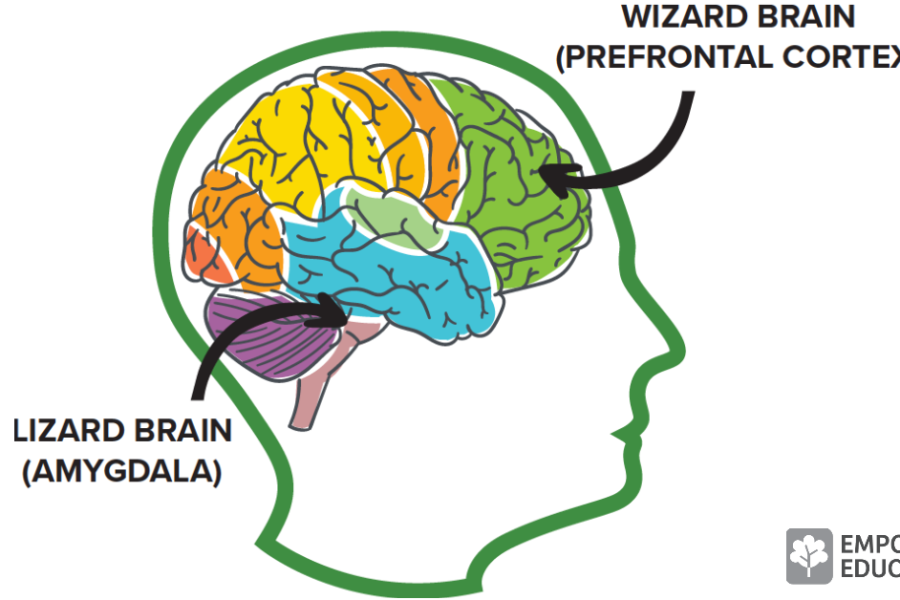
Five brain chemicals are central to the Neurocopy framework I’ve developed.
Cortisol, dopamine, oxytocin, serotonin and endorphins.
Each is associated with different aspects of our emotional experience.
For example, cortisol is involved in the body’s stress response. Dopamine plays an important role in motivation and anticipation. Oxytocin is associated with social bonding and trust-related processes. Serotonin helps regulate mood, while endorphins are involved in pain regulation and feelings of pleasure.
Of course, human emotions are far more complicated than five chemicals. No sales letter can guarantee a particular chemical response.
But understanding these systems gives us a useful way to think about the emotional journey we ask buyers to take.
And that’s where Neurocopy comes in.
Rather than simply asking whether your sales letter is emotional enough, we can ask more useful questions.
Is the opening addressing a concern your buyer already has?
Are you creating curiosity before asking them to believe something extraordinary?
Have you provided enough proof to earn their trust?
Does the buyer feel reassured as the purchasing decision approaches?
Or have you accidentally introduced doubt at precisely the wrong moment?
These are questions worth answering BEFORE you spend another £5,000 rewriting your sales letter.
The trouble with having too many experts.
Here’s another situation you may recognise.
You’re sitting in a marketing meeting.
Your media buyer thinks the problem is the landing page.
Your copywriter thinks the traffic isn’t properly qualified.
Your designer wants to shorten the page.
And your sales manager believes the offer needs improving.
Everyone has an opinion.
Nobody agrees.
An hour later, you’re still discussing what to change.
Now, wouldn’t it be nice if you could look at your sales copy and identify a specific weakness worth testing?
Instead of saying, “I think the headline needs more punch,” you could say, “I think we’re asking the buyer to trust our claims before we’ve given them enough evidence.”
That’s a much more useful diagnosis.
It gives you something specific to investigate.
Something you can change.
Something you can test.
And something you can learn from.
Even if your first test doesn’t win.
Because a failed test that teaches you something useful is far better than another expensive round of guesswork.
What a church insurance salesman taught me about sales copy.
Let me tell you about Ron Wadley.
Ron sells church insurance in America.
Not exactly the most exciting product in the world, is it?
After all, how many people wake up in the morning thinking, “I can’t wait to buy some church insurance today”?
Yet Ron had a problem that will be familiar to almost anyone selling a product or service.
He needed to persuade people that his offer deserved their attention.
Ron and I worked on a sales letter using Neurocopy.
The first version went into use.
And over the following nine months, through repeated use, Ron reported that the letter generated $500,000 in sales.
Now, I don’t want you to misunderstand what I’m saying.
That wasn’t half a million dollars from one mailing.
It was the reported cumulative result of using the letter over nine months.
And I’m not suggesting that every letter written using Neurocopy will produce anything like that result.
But it does demonstrate why I take the emotional structure of sales copy seriously.
Because when you get the message right for the people you’re trying to reach, the commercial consequences can be substantial.
The problem with relying on your gut.
I’ve nothing against intuition.
In fact, after more than three decades writing sales copy, I’ve developed a fair amount of it myself.
But intuition has its limitations.
Especially when you’re looking at a promotion that isn’t working.
You can stare at the same paragraph for an hour and convince yourself that the problem is the headline.
Another copywriter might blame the offer.
A third might insist you need a stronger story.
Who is right?
Maybe none of you.
That’s why I wanted something more systematic.
Something that could help identify possible weaknesses in the emotional progression of a sales message.
And something that could be used alongside the established principles of direct-response copywriting rather than replacing them.
One of the resources I incorporated into my work was Clayton Makepeace’s 37-Point Acid Test.
Clayton was one of the most accomplished direct-response copywriters of his generation.
His Acid Test provides a rigorous way of examining a sales promotion.
I’ve combined those principles with my five-chemical Neurocopy framework and insights drawn from 60 commercially successful sales controls.
The purpose?
To make the evaluation of sales copy more disciplined.
Not to eliminate testing.
Not to guarantee a winner.
But to help you make better-informed decisions about what to test.
And that’s an important distinction.
What happens if you keep doing what you’ve always done?
Perhaps nothing dramatic.
Your business may continue making sales.
Your advertising campaigns might remain reasonably profitable.
You could carry on paying copywriters, testing headlines and making occasional improvements.
But there’s another possibility.
Your advertising costs keep rising.
Your conversion rates remain stubbornly low.
Your competitors become more profitable.
And the gap between what your business earns and what it might be capable of earning grows wider.
The worst part?
You may never know how much money you’ve missed out on.
Think about that for a moment.
If your business is already attracting thousands of potential buyers, even a modest improvement in conversions could make a meaningful difference to your profits.
Not every visitor is a potential customer, of course.
But some of those who leave may have bought if your message had addressed their concerns more effectively.
And unless you investigate why they’re leaving, you’ll never know what opportunities you’re missing.
Here’s something you can do today.
I want you to find a sales letter or landing page that’s not converting as well as you’d like.
Don’t rewrite anything yet.
Instead, read it from the perspective of your most sceptical qualified buyer.
Not your happiest customer.
Not the person who already loves everything you sell.
The person who’s interested but isn’t quite convinced.
Now ask yourself five questions.
- What is this person worried about before they start reading?
- What makes them curious enough to continue?
- Where might they begin to doubt what I’m telling them?
- What evidence would help them feel more confident?
- What could still make them hesitate when it’s time to buy?
Take your time.
You may notice something you’ve overlooked before.
Perhaps you’re making an important claim without enough proof.
Perhaps you’ve introduced urgency before establishing trust.
Or perhaps your sales letter is answering questions your buyer isn’t asking while ignoring the one objection that’s preventing them from purchasing.
Whatever you find, don’t assume you’ve discovered the answer.
Treat it as a hypothesis.
Then test it.
Because the only way to know whether your changes improve conversions is to measure what happens when real buyers encounter them.
From Guesswork to Certainty.
For years, direct-response copywriters have relied on proven formulas, successful sales letters, experience and intuition.
And there’s a good reason for that.
They can work extraordinarily well.
I’m not suggesting we abandon any of them.
What I am suggesting is that we add another layer of understanding.
One that focuses on the emotional experience of the buyer as they move through a sales message.
That’s why I created Neurocopy.
To help entrepreneurs and copywriters look beyond the words on the page and examine what those words may be causing their buyers to feel, question and believe.
Because the real problem with disappointing sales copy isn’t always that you don’t know how to write.
Sometimes it’s that you don’t know what needs fixing.
And until you do, every rewrite is another educated guess.
My book, Neurocopy, explains the framework and shows you how to begin applying it to your own sales messages.
If you’ve ever looked at a disappointing conversion report and wondered why people aren’t buying, I wrote it with you in mind.
After all, you’ve worked hard to get people interested in what you’re selling.
Wouldn’t it be nice to understand what might be stopping more of them from buying?
Clive Cable
From Guesswork to Certainty.